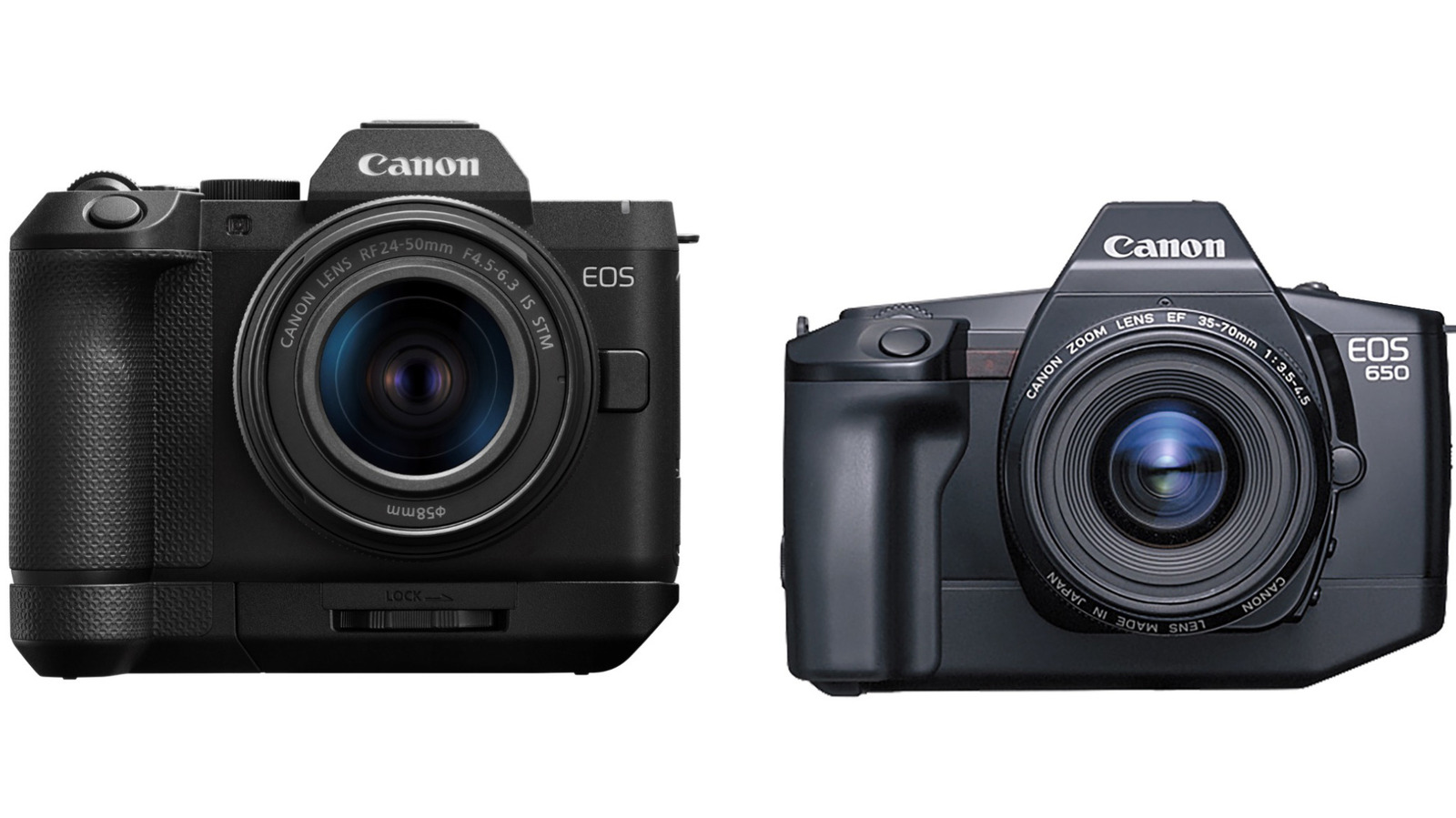
I have spent the better part of a decade watching camera manufacturers run away from their own history. Since the dawn of the digital mirrorless era, the aesthetic mandate at Canon has largely been 'rounded blob.' It was a design language of ergonomic efficiency, sure, but it lacked the tactile soul that made photography feel like a craft rather than a data-collection exercise. According to recent reports from Engadget, however, the new Canon R8 II is finally looking backward to move forward, borrowing its styling from the classic SLR film cameras that defined the brand’s golden age.
There is a specific kind of joy in a top plate that doesn't look like a piece of melted soap. The R8 II seems to be channeling the spirit of the AE-1 or perhaps the F-1, with sharper angles and a silhouette that suggests the presence of a pentaprism, even if the internals are purely electronic. For those of us who grew up winding film and listening for the mechanical thwack of a physical shutter, this isn't just about looking cool at a coffee shop. It is about the ergonomics of intention.
We have seen Fujifilm and Nikon dominate the 'retro-chic' market for years. The Nikon Zf and Zfc proved that photographers are willing to trade a bit of grip depth for a camera that feels like a precision instrument. Canon, meanwhile, stayed the course with its utilitarian, polycarbonate-heavy designs. By finally leaning into this classic SLR aesthetic for the R8 II, Canon is acknowledging that a camera is an object we live with, not just a tool we use. If I am going to carry a device around my neck for eight hours in a foreign city, I want it to possess a certain dignity.
However, the real test will be whether this styling is skin-deep. A vintage-inspired shell is a hollow gesture if the interface remains buried in a touch-screen menu. The beauty of the classic SLRs wasn't just the leatherette or the silver accents; it was the tactile immediacy of a dedicated shutter speed dial and a physical aperture ring. I hope Canon hasn't just put a vintage coat of paint on a standard digital chassis. We need the mechanical feedback to match the visual promise. Even if this is just a cosmetic exercise, it is a welcome departure from the sterile design language that has dominated the R-series thus far. It is high time Canon remembered that they used to make the most beautiful cameras in the world.