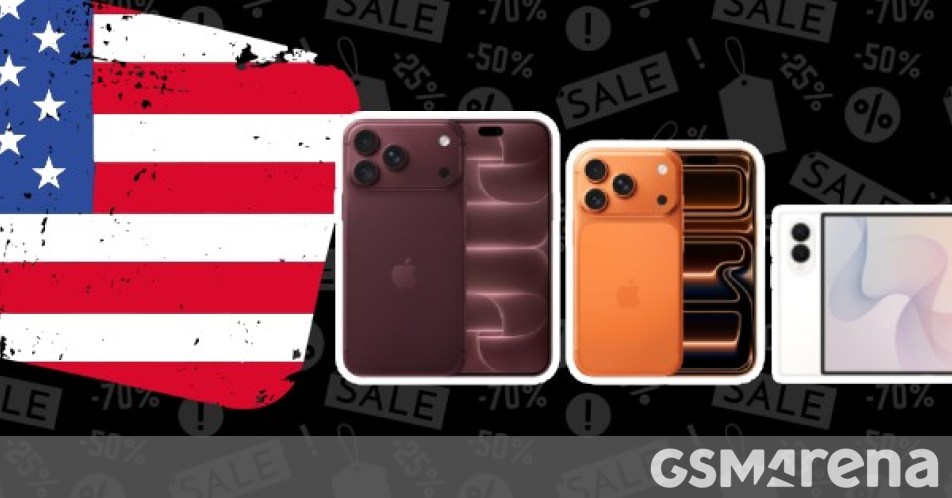
It is that time of year again when the tech cycle demands we look toward the horizon while simultaneously checking our wallets. The iPhone 18 Pro has officially launched, bringing with it the usual fanfare of incremental camera improvements and chipsets that are faster than most of us will ever actually need. But as I scrolled through the latest listings on GSMArena, it wasn't the new titanium sheen of the 18 Pro that caught my eye. Instead, it was the baffling price tag attached to refurbished iPhone 17 Pros.
There is a peculiar logic to the smartphone market that seems to defy the standard rules of depreciation. Usually, when the new king arrives, the old king is unceremoniously bundled into a discount bin. Yet, the iPhone 17 Pro is holding onto its value with a white-knuckled grip. Seeing these 'renewed' devices listed at prices that rival a brand-new mid-range flagship is, frankly, exhausting. It suggests a market where the entry price for 'Pro' features has become a permanent plateau rather than a descending staircase.
I suspect we are witnessing the 'good enough' peak. The iPhone 17 Pro was, and remains, a formidable machine. For the average user, the jump to the 18 Pro feels less like a leap and more like a polite step forward. Because the hardware has become so resilient, sellers feel emboldened to keep prices high, knowing that a year-old Pro model still outperforms almost anything else in the wild. But for the consumer looking for a deal, it creates a frustrating stalemate. If a refurbished 17 Pro isn't significantly cheaper than the new 18 Pro, the incentive to buy used evaporates, leaving us in a cycle of overspending.
Meanwhile, the grass looks a bit greener—or at least more affordable—over in the foldable camp. The news that Galaxy Z8 foldables are already seeing discounts is a sharp contrast. It seems Samsung is more willing to play the price game to get their futuristic hinges into pockets, while Apple's ecosystem remains a walled garden with a high cover charge.
I’ve always advocated for buying refurbished as a way to buck the trend of planned obsolescence, but that advocacy relies on the premise of a fair deal. If the iPhone 17 Pro remains expensive even in the shadow of its successor, the secondary market loses its luster. We’re left waiting for a price drop that may never come, watching the iPhone 18 Pro take center stage while the 'deals' remain stubbornly out of reach.